

Restorative Dentistry
A chipped tooth, a deep cavity or an unexpected fracture almost always raise the same question: can the tooth be saved, or is extraction inevitable? In the vast majority of cases, the answer is far more encouraging than most patients expect.
Dental restoration is today one of the most advanced areas of modern dentistry. With the right materials, technologies and protocols, it is possible to recover teeth that, a few decades ago, would have been lost for good. But to understand when and how a tooth can be saved, we first need to understand its structure.
A team with two decades of shared experience
At White Clinic, restorative dentistry is led by a team that has worked together for two decades, under the clinical direction of Dr. Miguel Stanley. That continuity translates directly into the consistency of the results: the same protocols, applied by the same experienced hands, across thousands of cases.
Dr. Miguel Stanley is an Adjunct Professor in restorative dentistry at the University of Pennsylvania and was a keynote speaker at the American Academy of Cosmetic Dentistry in 2026. This continuous presence at the specialty’s leading international forums allows him to bring to Lisbon protocols and materials discussed at the highest global level, adapted to each patient’s reality.
The structure of the tooth: what is at risk when damage occurs
To understand the oral recovery options available, it is essential to know the three layers that make up a tooth:
- Pulp
- the core of the tooth, home to the nerve, the lymphatic system and the vascular system. It is also one of the largest reserves of stem cells in the human body — a reflection of its extraordinary biological value.
- Dentin
- the intermediate layer, which makes up most of the tooth’s volume. It has a high concentration of collagen and both surrounds and protects the pulp.
- Tooth enamel
- the outer layer and the hardest structure in the human body, composed of roughly 99% hydroxyapatite crystals. It is the only part of the body incapable of regenerating on its own.
This inability of enamel to self-heal is the starting point for understanding the entire logic of conservative dentistry: once damaged, a tooth does not repair itself. Clinical intervention is therefore always necessary — and the earlier it happens, the more conservative and effective it can be.
Direct restoration: the immediate solution for smaller damage, done without rushing
When the damage — whether from a fracture, a chip or the treatment of a cavity — does not significantly compromise the tooth’s structure, the most appropriate option is direct restoration. This procedure is carried out during the appointment itself, on the surface of the tooth, without the need for laboratory-made pieces.
At White Clinic, we practise Slow Dentistry: each restoration is done at the pace the case demands, without shortcuts, even when that means dedicating more time to a single tooth. We use absolute isolation with a rubber dam in 100% of our restorative treatments — including in children — to ensure a clean, dry and safe working field, which translates directly into the durability of the final result.
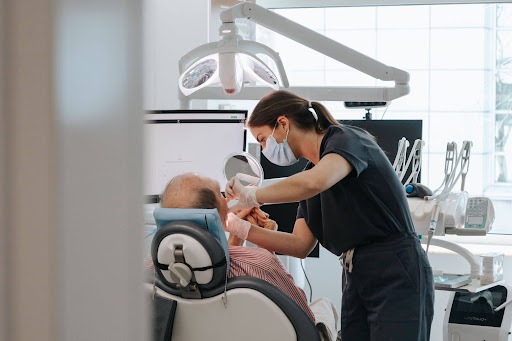
We use exclusively BPA-free composite resins, free of toxic components, sourced from leading manufacturers in Japan, Germany and Switzerland. The process involves:
- Preparing the tooth bed with a laser or high-precision KOMET diamond burs, to ensure a clean and stable surface.
- Absolute isolation of the tooth with a rubber dam, keeping the operating field free of contamination from saliva or blood throughout the procedure.
- Applying multiple layers of composite resin, cured with light.
- Final shaping and polishing to restore the tooth’s form, aesthetics and chewing function.
The result is a restoration that, in the hands of an experienced clinician, is virtually indistinguishable from the natural tooth — both in appearance and in function. This type of reconstruction has a proven track record of longevity, with many of our patients keeping their restorations in perfect condition for decades.
When the treatment plan involves several teeth, our clinical organisation allows us — whenever the situation permits — to complete multiple teeth in a single session, without rushing any individual step. The focus is always on completing treatment with the same rigour, tooth by tooth.
Indirect restoration: laboratory technology in service of the fractured tooth
When the fracture or loss of structure is too extensive to be repaired directly, we move to indirect restoration. Here, the dentist prepares the tooth bed using specific techniques, the tooth is digitally scanned with precision, and our in-house laboratory uses advanced software to design the missing piece.
3D printing: a solution in under 12 minutes
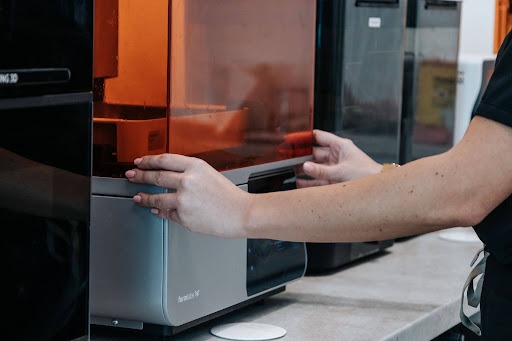
Today we work with our own 3D-printing technology, in our in-house laboratory, capable of producing a final solution in under 12 minutes — without relying on an external lab. The piece is then bonded to the tooth using high-strength adhesion agents, in a process that uses not conventional glues but specific composites that ensure a lasting bond. With an expected lifespan of 15 to 20 years, this approach represents a significant advance in the recovery of fractured teeth.
Robot-milled ceramic and zirconia
Alternatively, when the clinical situation calls for it, the piece can be milled by a precision robot using ceramics or zirconia. This process takes between three and four days but offers an exceptional degree of aesthetics and strength, and is frequently the basis for the dental crowns we use in more complex cases.
White Clinic has a 26-year track record in which these restorations remain healthy in our patients over time, with a high degree of aesthetic and functional predictability.
In both cases, the goal is the same: to preserve as much natural tooth structure as possible, safeguard chewing function and give the patient back a healthy, lasting smile.
When a tooth cannot be saved: the most common myth in the clinic
One of the questions we hear most often is: “Can every tooth be saved?”
Almost always yes — except in one specific situation.
Dr. Miguel Stanley
The only reason a tooth may be beyond saving is when the fracture or the decay lies below the gum line and below the bone line, in an area known as sub-osseous. Teeth are anchored in the periodontium, a structure made up of bone, periodontal ligament and gum. When the damage penetrates that zone so deeply that it prevents safe rehabilitation — whether with composite, filling material or a crown — without the risk of contamination from saliva or blood during the process, extraction becomes inevitable.
In that scenario, the solution is to extract the tooth and replace it with a dental implant, which restores chewing function and aesthetics in a lasting way.
And when decay reaches the pulp?
When treating a cavity, or a fracture, compromises the tooth’s pulp, the pulp must be removed through root canal treatment. Carried out with ultra-specific techniques and protocols, this procedure removes the affected tissue and still allows the tooth to be preserved and rehabilitated. The tooth can continue to perform its function even without pulp, provided the remaining structure allows it.
Frequently asked questions about dental restoration
What is the difference between direct and indirect restoration?
Direct restoration is carried out during the appointment itself, applying composite resin directly onto the tooth, always under absolute isolation with a rubber dam. Indirect restoration involves scanning the tooth and manufacturing a piece in the laboratory — whether by 3D printing or by milling in ceramic or zirconia — which is then bonded to the tooth. The choice depends on the size and location of the damage.
How long does a dental restoration last?
With today’s materials and techniques, a direct restoration can last 10 to 15 years or more. An indirect restoration, such as a ceramic or zirconia dental crown, has an expected lifespan of 15 to 20 years, and can exceed that with proper care.
Is dental restoration painful?
The procedure is carried out under local anaesthetic, so the patient feels no pain during the intervention. Afterwards, there may be some temporary sensitivity, which tends to fade within the first few days.
When can a fractured tooth not be saved?
A fractured tooth cannot be saved when the fracture extends below the bone line, making safe, lasting rehabilitation impossible. In these cases, extraction followed by a dental implant is the most suitable solution to preserve chewing function and oral health.
Why do you always use a rubber dam, even with children?
Absolute isolation with a rubber dam keeps the tooth completely free of saliva and contamination during the procedure, which is decisive for the durability of the restoration. We consider this step non-negotiable, regardless of the patient’s age or the size of the treatment.
Does White Clinic use safe materials in its restorations?
Yes. At White Clinic we use exclusively BPA-free composite resins, free of toxic components, sourced from leading manufacturers in Europe and Japan, together with precision KOMET burs. The biological safety of our materials is a priority in every treatment we perform.
Worried about a damaged tooth? Let’s look at whether it can be saved.
Book a consultation